Why Credit Scores Matter for First-Time Buyers
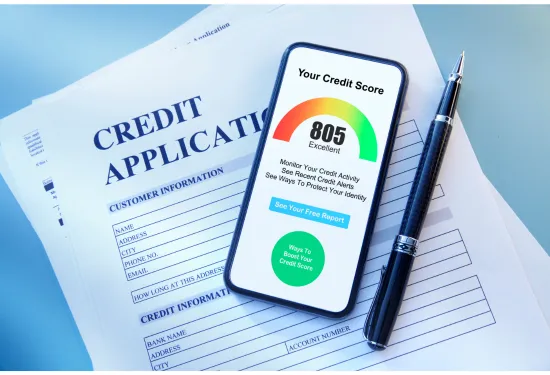
Securing a mortgage as a first-time buyer hinges on your credit score. Lenders use your score to judge your reliability, determine your mortgage eligibility, and set your interest rate. A higher score unlocks better deals and lower monthly payments. Even a small increase in your score can make a significant difference to your mortgage options and the total cost of your loan over time.
Three main credit reference agencies operate in the UK: Experian, Equifax, and TransUnion. Each uses a different scoring scale, but the principles are similar. Your score reflects your payment history, credit utilisation, length of credit history, types of credit, and recent applications.
Experian: 0–999 (Excellent: 961–999)
Equifax: 0–1000 (Excellent: 811–1000)
TransUnion: 0–710 (Excellent: 628–710)
The higher your score, the more likely you are to be approved for a mortgage at a favourable rate
Quick Wins: Actionable Credit-Boost Tactics for 60 Days
Credit utilisation is the percentage of your available credit that you’re currently using. This is one of the most influential factors in your score. UK lenders typically want to see your utilisation below 30%—ideally closer to 10%.
For example, if your total credit limit is £5,000, try to keep your outstanding balances under £1,500. Paying down credit card balances—even temporarily, before the statement date—can deliver a rapid score boost.
Pay down credit card balances as much as possible.
Spread balances across several cards if you have them, rather than maxing out one.
Avoid closing unused credit cards (unless they have high fees), as this reduces your available credit and can increase your utilisation ratio.
Being on the electoral roll at your current address is a high-impact, quick win. It verifies your identity and address, signalling stability to lenders. Registration can take as little as two weeks to update on your credit report and is essential for maximising your score.
Ensure your details are correct and match those on your credit accounts.
A “thin file” means you don’t have enough credit history for lenders to assess your risk, which can be just as limiting as having bad credit.
Open a credit card, even a basic or “credit builder” card, and use it for small purchases, paying off in full each month.
Consider a credit-builder loan or being added as an authorised user to a family member’s card.
Use services like Experian Boost or similar, which allow you to include regular payments (e.g., Netflix, Council Tax, utility bills) in your credit file.
Always pay all bills on time—payment history is the backbone of your score.
Errors on your credit report can drag down your score and scupper your mortgage application. These can include incorrect addresses, accounts that aren’t yours, or wrongly reported missed payments.
Check your credit report with all three agencies (Experian, Equifax, TransUnion).
Dispute any inaccuracies directly with the agency—corrections can be made within weeks.
Missed or late payments are a major red flag for lenders. Setting up direct debits ensures you never miss a payment, safeguarding your score
What Lenders Scrutinise: Mortgage Eligibility in the UK
Lenders take a holistic view of your finances, but some factors weigh more heavily than others.
Lenders check your credit score and look for patterns: consistent, on-time payments, low utilisation, and a lack of recent negative marks (defaults, CCJs, bankruptcies). They often use specialist versions of credit scores, not just what you see on free apps, and may check multiple agencies.
The more you can put down as a deposit, the better. A higher deposit reduces the LTV ratio, making you less risky and unlocking better rates. Most first-time buyers put down 5–20%.
Lenders typically offer mortgages up to 4–5 times your annual income, but this can vary. Stable, regular income (from employment or self-employment with strong documentation) is crucial.
Lenders conduct a detailed affordability assessment, reviewing your income, regular outgoings, debts, and even future interest rate rises to ensure you can afford repayments.
You must be at least 18, and many lenders require the mortgage to be repaid by age 75. If your mortgage term will extend into retirement, you’ll need to show evidence of retirement income.
If you’ve taken out joint credit (loans, credit cards) with someone else, their credit behaviour can impact your application. Ensure any outdated or incorrect financial associations are removed from your file
How Much Can I Borrow? Using Mortgage Calculators and Further Advance Tools
Online calculators estimate how much you can borrow based on your income, outgoings, debts, and deposit. Most lenders offer 4–4.5 times your annual income, but actual offers depend on your credit score, spending, and the lender’s criteria.
Enter your income (and joint applicant’s, if applicable).
Add regular bonuses or overtime if consistent.
Disclose all debts and regular outgoings.
The calculator estimates your maximum borrowing and potential property price.
If you already have a mortgage and want to borrow more (a “further advance”), lenders will reassess your affordability and credit score. Additional borrowing is usually capped by your income, LTV, and existing mortgage terms. Calculators for further advances work similarly, but factor in your current mortgage balance and equity.
You can typically borrow up to 85–90% of your property’s value, minus your current mortgage.
The better your credit score, the more likely you are to be approved for additional borrowing at a competitive rate.
Practical Playbook: Your 60-Day Credit Score Action Plan
Register on the electoral roll at your current address.
Set up (or double-check) direct debits for all bills.
Pay down credit card balances, aiming for <30% utilisation.
If you have a thin file, apply for a credit-builder card or loan and use it responsibly.
Dispute any errors found on your credit report.
Continue making all payments on time.
Avoid applying for unnecessary new credit.
Monitor your score for improvements and ensure all positive actions are reflected.
Conclusion: The Path to Mortgage Success
Improving your credit score as a first-time buyer in the UK is both achievable and impactful, even within 60 days. By focusing on quick wins—optimising credit utilisation, registering on the electoral roll, building out a thin file, and ensuring flawless payment history—you can significantly boost your mortgage eligibility. Understanding what lenders scrutinise and using mortgage calculators to estimate your borrowing power puts you firmly in control of your home-buying journey.
Remember: every positive step you take now not only improves your chances of getting that all-important mortgage but also saves you money for years to come.
Keywords integrated: improve credit score mortgage UK, credit score first time buyer, mortgage eligibility UK, additional borrowing on mortgage calculator, how much can I borrow against my house UK, further advance calculator.